To a rooftop plinth, the roof slab and all internal floors
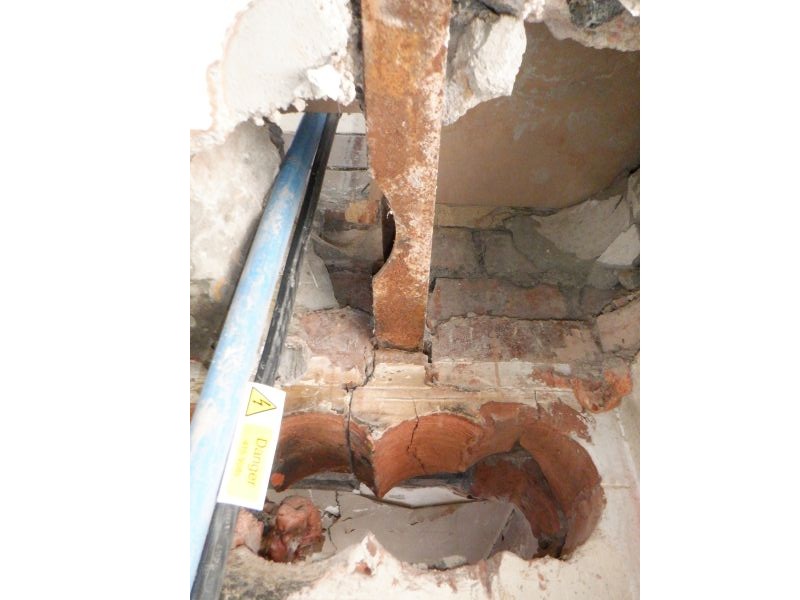
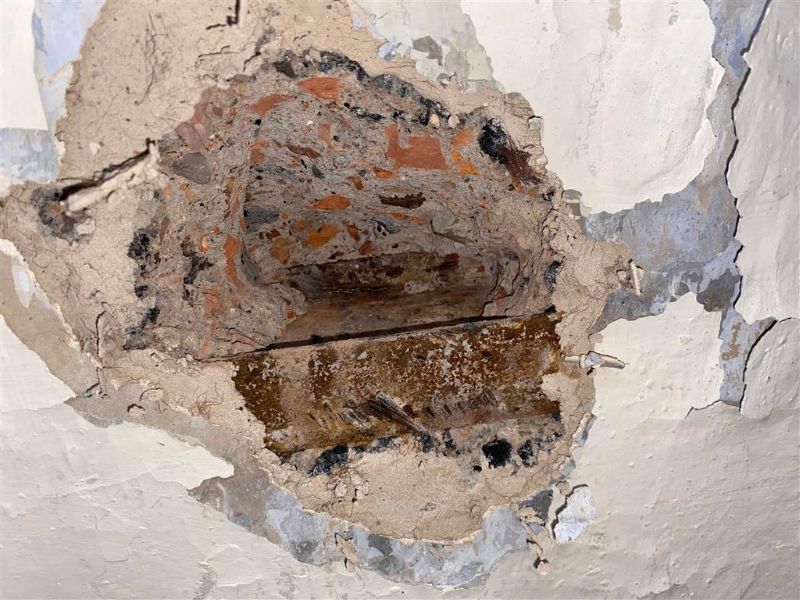
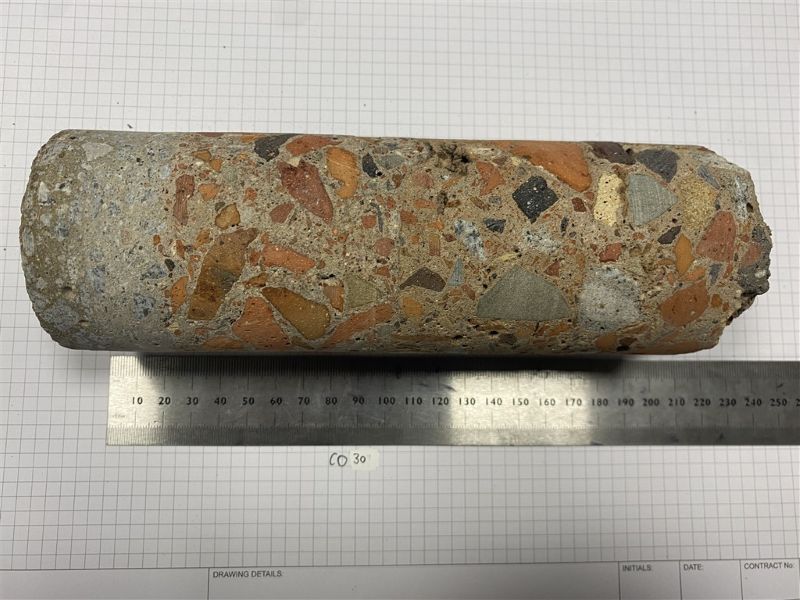
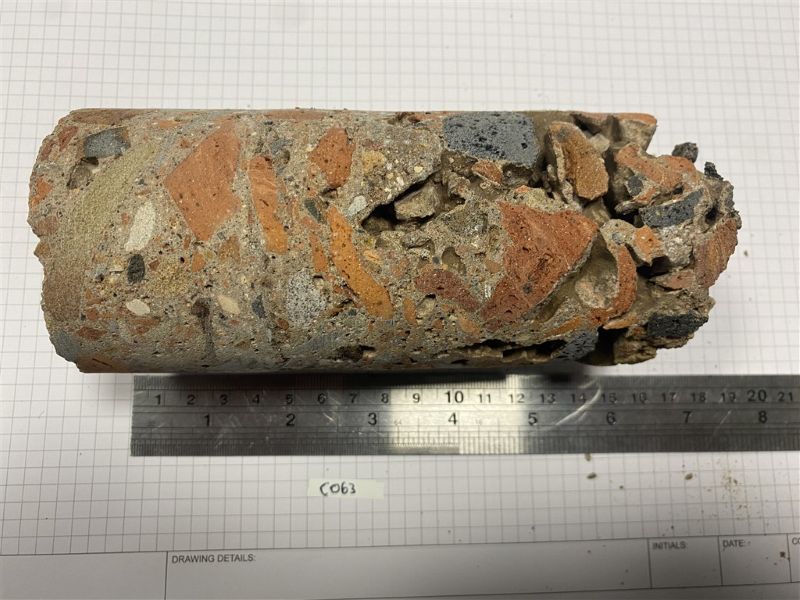
1. Determine buildup of floor / roof finishes in all 75 intrusive locations of filler joist floor, including cores to assess concrete and breakouts to assess joists.
2. There are 3 plinths on the roof close to the south elevation. Verify buildup in each of these.
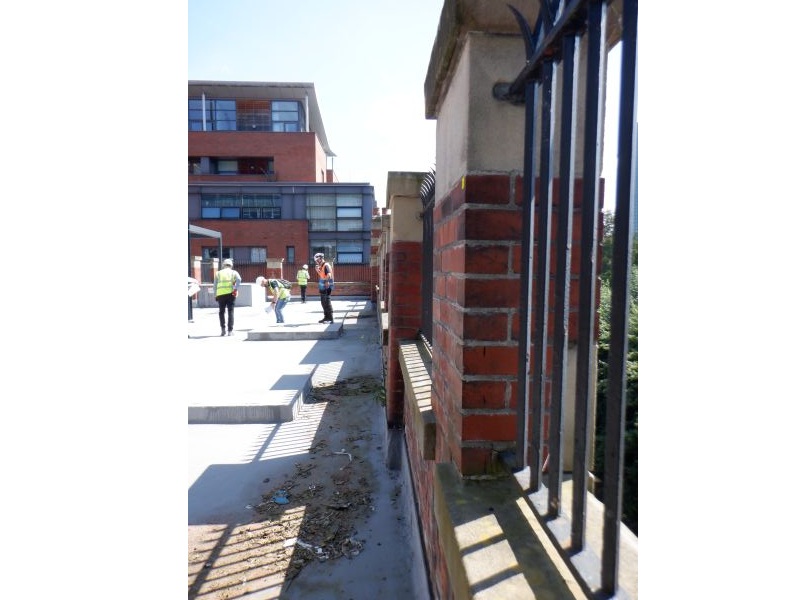
To the south facing roof parapet
3. This has a significant outward lean. It would aid assessment of repair / rebuild requirements if the walls composition could be investigated along with thickness measurement.
4. Include for targeting additional investigation at the base of the wall / roof junction to ascertain if there’s a contributing cause such as corroding (expanding) metal causing some of the lean.
Verification of precast unit type and thickness
5. At second and main roof levels, pre-cast concrete is visible in the southeast corner.
5.1 Determine extent and thickness.
5.2 It doesn’t look like RAAC but please can this be verified too.
Investigation of cracking through a masonry wall at Level 1 / Level 1 mezzanine, through an internal wall between Room 11 and Room 13
6. Determine extent of crack.
7. Measure crack width.
8. Determine wall thickness and composition.
Sampling and analyses of brickwork mortar in 40 locations
9. Existing mortar analysis and testing for type (e.g. lime or Portland cement) and mix proportions, for design of appropriate remedial works materials.
Assessments of the external facades for maintenance and repair works
10. Full external Visual Inspection of the facades, recording defects (not repairs) onto drawings and scheduling of same, for pricing purposes.
11. Remote/ Drone Survey.
Assessments of timber floor construction
12. To timber floors i.e. plywood with floorboard underneath I could do with knowing the build-up in a few random areas (plywood removed) and distance down to the concrete floors from top of timber, what the material under the floorboards in between the joist is (in areas where you can still see floorboards it could be a screed of some sort or could just be years of rubbish / builders rubble), what size the joists are, what condition the joists and floorboards are in under the plywood to take the new loads being imposed onto them i.e. mezz staircases
Assessments of metal deck floor at ground floor mezzanine level
13. The concern is it appears to have no metal reinforcement, nor steel fibres. The deck spans are ‘single span’ condition which generally should also have an additional metal reinforcement bar in each trough, whether mesh or fibre reinforced floor type, to provide sufficient fire resistance. Please can you include for investigation to determine.
13.1 If metal mesh reinforcement is present – if so, bar diameter and spacing
13.2 If steel fibres are present – if so, approximate fibre diameter
13.3 If metal reinforcement bar is present in troughs – if so, bar diameter
14. The preparation of 12 Core samples for the evaluation of fibre contents, via Visual Examination of the Cores.
The Project was completed, to both the Client’s and Main Contractor’s satisfaction, using range of NDT and Intrusive tec.
The Great John Street Hotel, Manchester
Simon Bladon
17/11/25
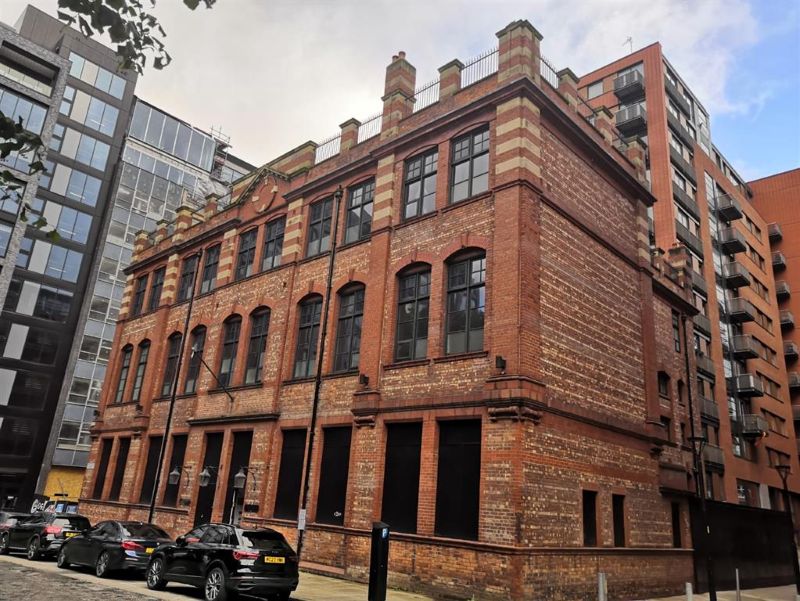
1 of 7 - Frontage
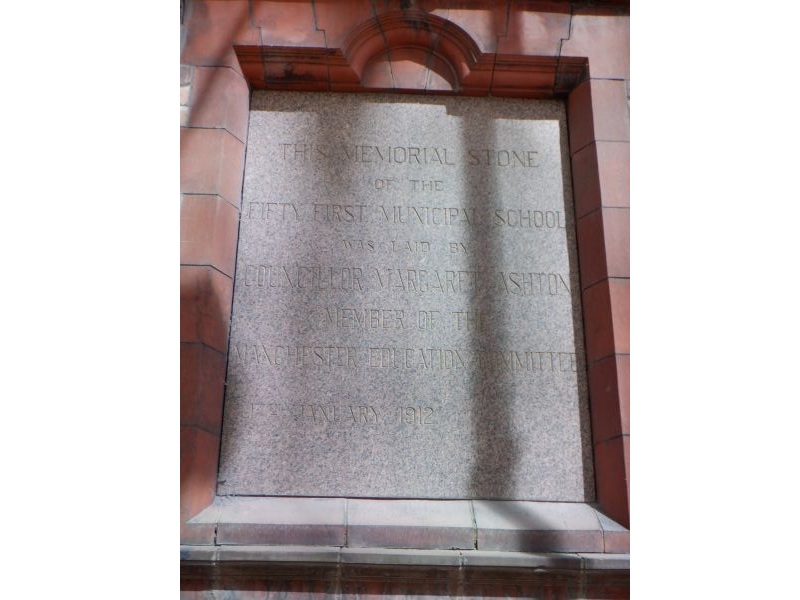
CRL Surveys Limited carried out a structural and condition assessment of the Great John Street Hotel, in Manchester. The building was originally constructed in 1912, as a school, interestingly with a playground on the roof and changed use, to a hotel, circa 2005.
The building comprised a structural cast iron frame, with brickwork around, and originally on 3 storeys. The floors were of filler-joist construction. An additional floor was added in 2004/5, with an extension added in 2012.
The building had been vacant for some years and proposed for a complete, ‘back to brick’ refurbishment, the initial strip-out exposing a host of dilapidated knowns and some injudicious or questionable historical structural alterations, which added to a growing list of unknowns. The combined Engineer’s and Contractor’s Scopes included:
75 Test Areas, variously requiring:
The building comprised a structural cast iron frame, with brickwork around, and originally on 3 storeys. The floors were of filler-joist construction. An additional floor was added in 2004/5, with an extension added in 2012.
The building had been vacant for some years and proposed for a complete, ‘back to brick’ refurbishment, the initial strip-out exposing a host of dilapidated knowns and some injudicious or questionable historical structural alterations, which added to a growing list of unknowns. The combined Engineer’s and Contractor’s Scopes included:
75 Test Areas, variously requiring: